
Safety & regulations
5 Important Safety Tips for Operating Trailer Dollies
Five safety rules for a powered trailer dolly: hitch it right, stay under tongue weight, clear the path, go slow on slopes and keep the dolly stock.
Blog by the TRAX team in Aylmer, Ontario. Updated November 23, 2026.
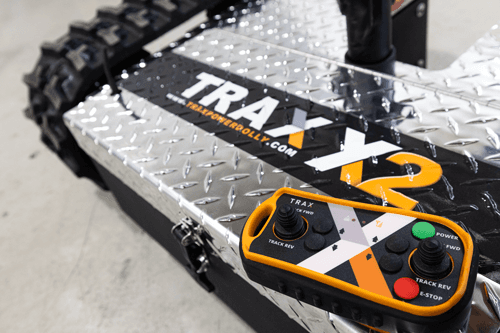
A powered trailer dolly is simple to run, but it still moves thousands of pounds. These five habits keep you, your trailer and the people around you safe, whether you park a boat in the garage or shuffle trailers around a dealer lot.
What a powered trailer dolly does
A powered dolly hitches to your trailer tongue and moves it around your yard, shop or storage lot without a tow vehicle. TRAX dollies handle trailers from 6,000 lb (TX6000) up to 12,000 lb (X2 and J5). The TX6000 and GT8000 are walk-behind with a thumb throttle. The X2 and J5 run from a wireless remote. For a full walk-through of how they work, see understanding electric powered trailer dollies.
- Tight spaces: park in spots a truck can't reach.
- Less strain: no pushing or pulling a heavy tongue by hand.
- Better view: you walk beside the load instead of reversing blind.
It is still heavy machinery. Treat it that way.
1. Hitch the dolly correctly
- Use a ball that matches your trailer coupler. The size is stamped on the coupler.
- Seat the coupler fully on the ball and close the latch before you move.
- Set the ball mount height so the tongue sits about level.
- Plug in the 7-way if your trailer has electric brakes. TRAX dollies release the brakes while moving and re-apply them when you stop.
- Read your dolly's manual and your trailer's manual for any extra steps.
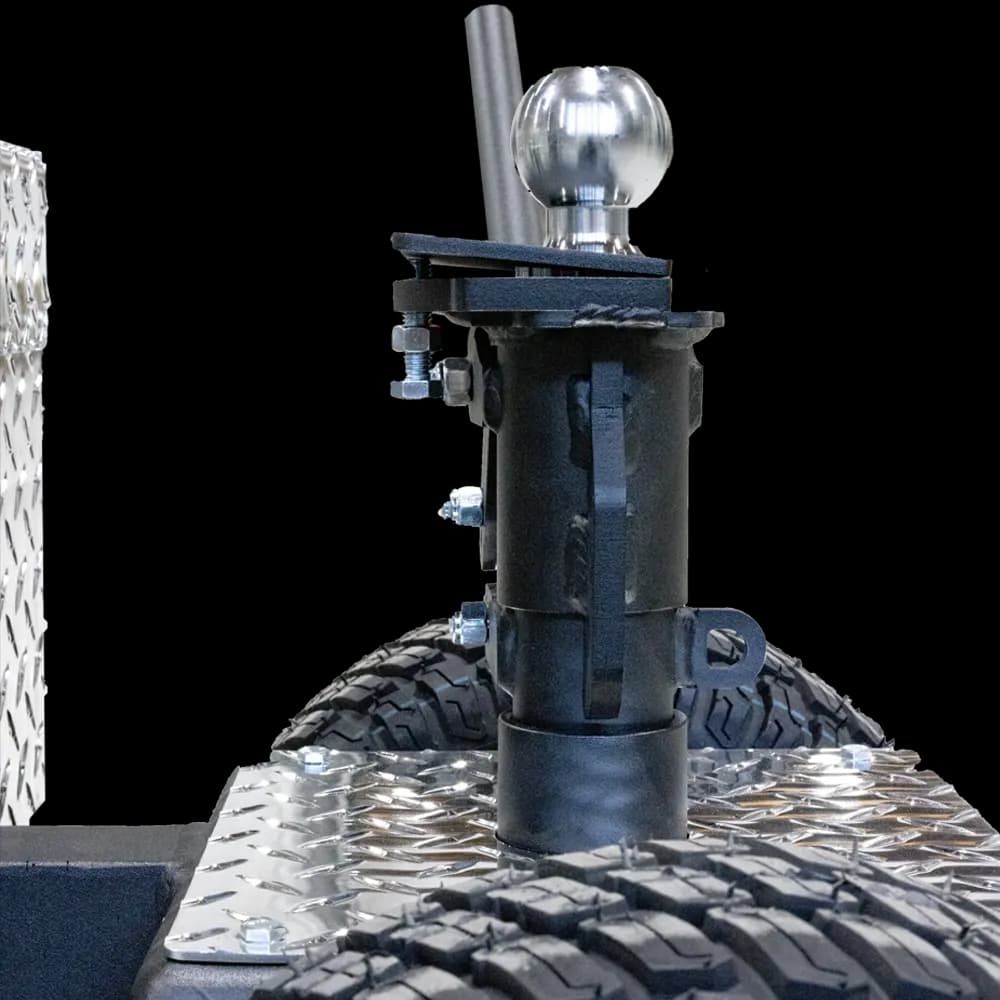
TRAX walk-behind dollies take standard 1" fine-thread shank balls in 1 7/8", 2", 2 5/16" or 50 mm. If your trailer uses a pintle ring, 5th wheel pin or gooseneck, check the hitch compatibility guide before you hook up.
2. Respect tongue weight and balance
Every dolly has a tongue weight limit. On the TX6000 and GT8000 it is 900 lb on air tires and 2,000 lb on solid tires. The X2 and J5 are rated for 2,000 lb. Stay under the limit for your machine.
- Most trailers tow best with about 10 to 15 percent of their weight on the tongue.
- Load roughly 60 percent of the cargo ahead of the trailer axle.
- Keep left and right sides even.
- Tie down loose items so nothing shifts while you move.
- Never load a trailer past its rated capacity.
Worked example
A loaded 7,000 lb travel trailer with 12 percent on the tongue puts 840 lb on the ball. That is just under the 900 lb air-tire rating, with little room to spare. Add a full water tank or a loaded front storage bay and you can go over. In that case the GT8000 on solid tires (2,000 lb) is the safer choice. Our post on tongue vs gross weight shows how to measure both.
3. Walk the path first
Trailers, boats and RVs have big blind spots. Before you move:
- Walk all the way around the trailer.
- Clear tools, hoses, toys and anything else from the path.
- Check overhead for doors, branches and wires.
- Pull the wheel chocks and raise the tongue jack fully.
- Tell anyone nearby that you are about to move the trailer.
4. Stay alert while you move
- Start slow. Use the speed lockout or the fine-speed setting near walls, boats and vehicles.
- Keep your eyes on the trailer and the space around it.
- Don't run the dolly when tired or after drinking.
- Stop the dolly before adjusting anything on it or in the trailer.
- Take extra care on slopes. Go slowly and chock the trailer wheels before you unhitch.
On the TX6000 and GT8000, full speed is 222 ft/min, about 2.5 mph. The speed lockout switch caps it at 25 percent, about 46 ft/min, which is the right speed for the last few feet into a garage. The built-in motor brake holds the dolly the moment you let go of the throttle, even on a slope.
The remote-controlled X2 has a safety link: the remote and receiver confirm each other three ways every second, and the motors shut down if the signal drops.
5. Don't modify your dolly
Changes to the motor, controls, hitch or frame can make the dolly unsafe and are not covered by the warranty. If your dolly isn't right for the job, talk to us about a model that is. For example, the GT8000 takes a 5th wheel or gooseneck adapter, and the Rhino is built for carts and wagons with no tongue weight. Factory accessories are designed to fit without changes to the machine.
Pre-move checklist
- Batteries charged and battery box closed.
- Tires inflated and free of damage.
- Ball matches the coupler, latch closed, safety pin in.
- 7-way plugged in on trailers with electric brakes.
- Path walked and clear, overhead checked.
- Chocks pulled, tongue jack raised.
- Speed lockout on for tight spots.
- No children at the controls, and eye protection in dusty areas.
Maintenance
A well-kept dolly is a safe dolly. Keep the batteries charged, check tire pressure and look over the hitch and wiring. If something seems off, contact us at help@traxpowerdolly.com or 1-844-488-8729 and we'll help you sort it out.